

Questions by The Freethinkers Alliance
Introduction
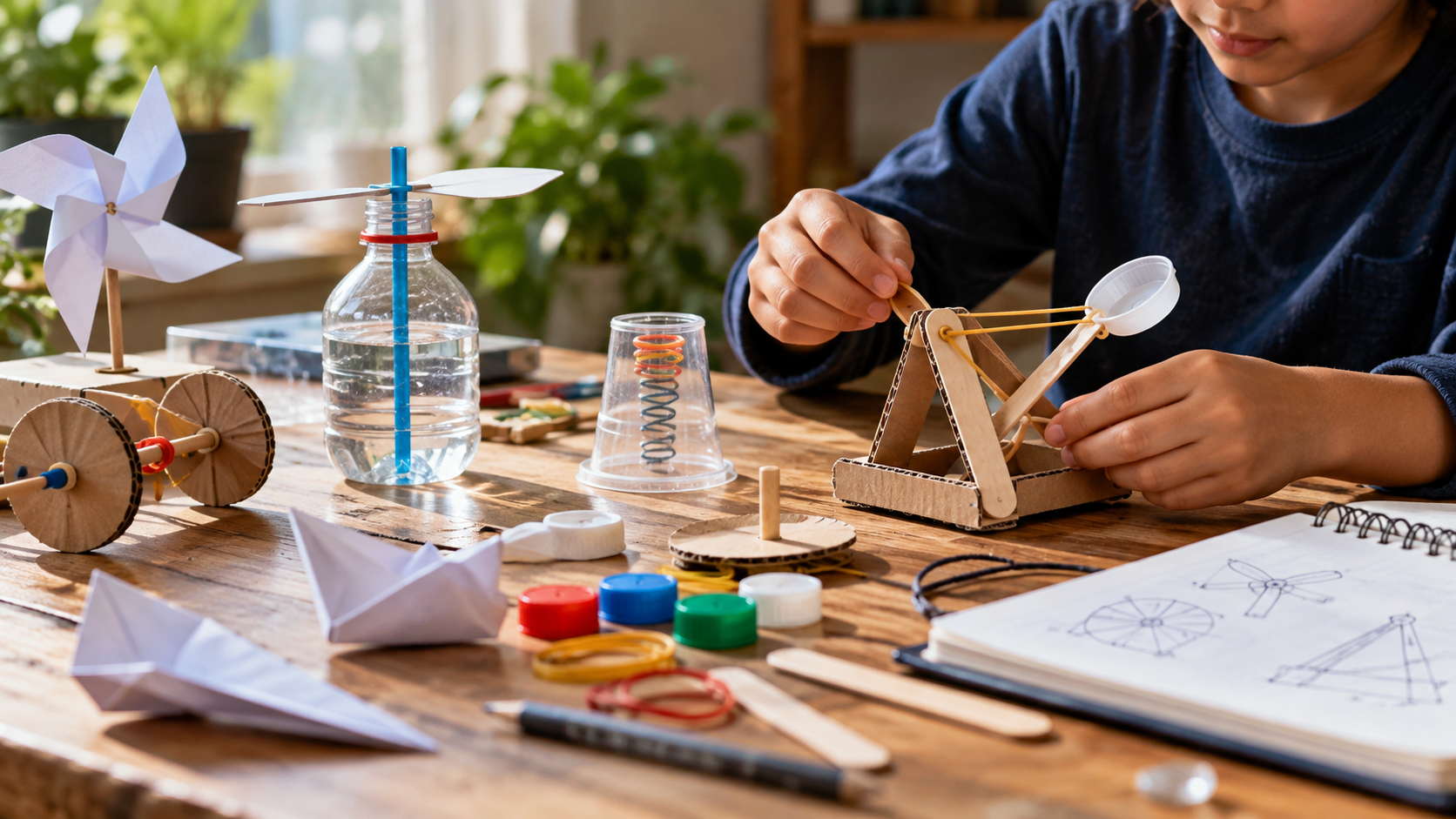
What if a piece of paper, an old plastic bottle, or a discarded cardboard box could help a child understand science? What if learning science meant building, experimenting, asking questions, and discovering how the world works rather than simply memorising definitions and formulas?
Indian science educator and toy inventor Arvind Gupta has spent decades demonstrating how simple, inexpensive materials can make scientific ideas accessible and enjoyable for children. His approach places curiosity, experimentation, and learning by doing at the heart of science education.
In this written Q&A with The Freethinkers Alliance, Gupta reflects on the origins of his work, the educational value of play, the limitations of rote learning, and the importance of encouraging children to question, experiment, and think independently. He also shares his views on making science education more accessible and strengthening practical learning in India.
Questions and Answers
1. What first inspired you to use simple toys and everyday materials to introduce children to scientific ideas?
Arvind Gupta:
The use of simple toys made from throwaway material occurred to me in 1978, when I participated in the famous Hoshangabad Science Teaching Programme (HSTP). This programme aimed at making science learning fun for village children using locally available materials. Most toys incorporate some science principle which children intuitively learn during play.
2. Why is hands-on experimentation often more effective than simply explaining scientific concepts from a textbook?
Arvind Gupta:
There is an old Chinese saying: “I saw, I forgot; I heard, I remembered; I did, I understood.”
Children are new to the world. They are eternally curious. They want to understand how the world works. There are two cardinal principles of education:
- From the concrete to the abstract.
- From the near to the far.
So, to capture the imagination of children, start with a simple science experiment and not with some definition or formula.
3. How can an ordinary object—such as a piece of paper, a straw, or a discarded household item—become a tool for teaching an important scientific principle?
Arvind Gupta:
Children learn best with things they are familiar with—objects they use in everyday life. So, if you can make something extraordinary using a daily-use object, then it becomes magic for children.
We have a notion that science can only be learnt in a well-equipped laboratory with fancy burettes, pipettes, flasks and beakers. This is patently untrue. All children are born scientists. If you observe them in their free moments, they are always tinkering, pottering, pulling things apart, putting things back. Children immediately relate to ordinary things, which they have seen and used in their daily lives.
4. What role does play have in developing a child’s curiosity, creativity, and ability to solve problems?
Arvind Gupta:
Play is very serious business. I sincerely believe that if it’s not fun, it’s not learning.
In our system, rote learning is emphasised. It kills understanding and comprehension. Wherever possible, teach a subject through projects, practical models, and field trips. This will make the subject more interesting for children.
5. Many classrooms place considerable emphasis on memorisation and examinations. How can teachers make more room for exploration, experimentation, and independent questioning?
Arvind Gupta:
Yes, “chalk and talk, mugging and spitting” is the staple in most schools. In many classes, teachers dictate notes which the children copy and mug up. The reasons for this are deeply cultural. As a society, we do not give importance to doing, but emphasise recitation.
Very few people in our country learn through instruction manuals. Our culture is oral. We see people do things, and that’s how we learn. Doing and experimentation are not emphasised.
Look at our most important exams. In JEE and NEET, there is no practical test; you just need to mark the correct answer in multiple-choice questions.
All the IIT and NEET coaching institutes make our children dumb!
If the government were to allocate 50% weightage to Class 12 board exams and another 10% to practicals, the whole scenario would radically change!
6. How can parents encourage scientific curiosity at home, even when they have limited time, money, or access to educational resources?
Arvind Gupta:
More than money, parents need to spend time with their children working on projects—doing things, making things. This will subtly convey the message to children that working with the hands is important.
Mothers must encourage young boys to help with cooking. Girls must buy groceries and other stuff for the home.
7. What can educators do to help children feel comfortable asking questions, making mistakes, and changing their minds when evidence challenges their assumptions?
Arvind Gupta:
Ours is the banking approach to education. The teacher knows all, is the fountainhead of all knowledge, and their task is to pour that knowledge into empty cups—the children’s heads.
So, in a typical classroom, the teacher speaks and the children listen. Children are never encouraged to ask questions. Very often, the teacher does not have the answers.
The teacher should admit that they don’t have the answer and tell children, “Let’s discover it together!”
This will encourage children and make learning participatory.
8. How can low-cost, locally available materials make science education more accessible to children from different economic backgrounds?
Arvind Gupta:
The poorest children go to government schools or low-cost private schools. They cannot afford expensive science kits and models.
So, by using low-cost, often throwaway materials like old plastic bottles, old newspapers, cardboard cartons, old pens, refills, Tetra Paks, etc., science will become fun for them.
We have 8,700 videos, each two minutes in duration, titled Toys from Trash on our website, arvindguptatoys.com.
About 12 crore children have seen our videos.
9. In an age when children encounter a great deal of information online, how can early science education help them develop critical thinking and distinguish evidence from unsupported claims?
Arvind Gupta:
Today there is an abundance of information. But information becomes knowledge only when we act on it.
2500 years back, the wise Buddha gave a good definition of science:
“Do not believe in anything just because it is written in your holy book, do not believe in anything just because your grandfather tells you, do not believe in anything just because your teacher tells you, test everything against reality, and if you find it to be true and to the benefit of all, then embrace it.”
Critical and independent thinking is the most important. Such thinkers will challenge dominant paradigms and leaders. So, no ruling party wants critical thinkers.
10. What changes would you most like to see in India’s approach to science education so that children grow up not only knowing scientific facts but also thinking scientifically?
Arvind Gupta:
Some things have changed. Today the government is itself saying that children should learn through activities and projects. The government has opened thousands of Atal Tinkering Labs. This is a welcome change.
But the government, instead of increasing public allocation to education, is actually cutting funds. It wants to abdicate its responsibility by handing over government schools to the private sector.
About Arvind Gupta
Arvind Gupta is an Indian science educator and toy inventor known for making science accessible through simple toys, hands-on experiments, and everyday materials. His educational approach encourages children to explore scientific principles through practical activities rather than relying solely on textbooks and memorisation.
Through his Toys from Trash initiative, he has shared low-cost science activities designed to help children and educators discover the science hidden in ordinary objects.
Learn more about his work and educational resources at arvindguptatoys.com.
About The Freethinkers Alliance
The Freethinkers Alliance is an independent platform promoting scientific literacy, curiosity, skepticism, critical thinking, and evidence-based public discussion.
Through expert contributions, educational articles, and thoughtful discussions, the platform aims to encourage readers to question assumptions, explore ideas, and approach the world with reason and curiosity.
Editorial Note
This written Q&A is based on responses provided by Arvind Gupta to questions submitted by The Freethinkers Alliance. His answers and viewpoints are attributed to him. The introduction and other editorial material were prepared by The Freethinkers Alliance. Minor language and formatting adjustments have been made for readability.
Questions by: The Freethinkers Alliance
Website: https://freethinkersalliance.com/
